

Inclusion

Inclusion

SEND

At Shireland Collegiate Academy, our commitment to inclusion goes far beyond access—it is about empowering every learner to thrive. Students identified with SEND experience a curriculum designed around innovation, equity, and aspiration, ensuring that every young person can flourish academically, socially, and emotionally.

We deliver a rich blend of1:1 and small‑group interventions, combining high‑quality direct teaching with cutting‑edge assistive technology to remove barriers and unlock potential. Our Inclusion Team works seamlessly alongside classroom teachers across all subjects, ensuring that adaptations are meaningful, consistent, and grounded in strong relationships.

Our specialist areas provide highly tailored support:

  • The Hub offers a safe, nurturing SEMH environment led by our Intervention Manager, where students build resilience, emotional literacy, and confidence.
  • The LINK supports students with Speech, Language and Communication Needs (SLCN) and Autism Spectrum Disorder (ASD), offering targeted 1:1 sessions, structured group work, and opportunities to develop communication, interaction, and independence skills.
  • The Sensory Room provides a calm, therapeutic space where students can regulate, reset, and return to learning feeling safe, settled, and ready to engage

We believe successful SEND practice is built on partnership. Families are warmly welcomed to our termly SEND Cafés, where they can explore best practice in real time, celebrate progress, and collaborate with staff and intervention leads. These sessions strengthen trust, deepen understanding, and ensure every family feels seen, heard, and valued.

Mrs L Prince

Assistant Principal: SENDCo

Documents and Links

Shireland Collegiate Academy Trust highly values a holistic approach to supporting SEND students. We are working collaboratively with external organisations to promote a range of SEND opportunities for students and their families.

Please see the Academy’s SEND Information Report (below) or contact Mrs L Prince (SENCo) – lprince@sca.shirelandcat.net

The SEND Inclusion Award


We are proud to be an award‑winning school, recognised with the prestigious SENDIA (SEND Inclusion Award) for our exceptional commitment to inclusive practice. This accreditation celebrates our dedication to removing barriers, championing every learner, and ensuring that students with SEND experience high‑quality teaching, personalised support, and a school culture where they feel valued, understood, and able to thrive. Our SENDIA status reflects a whole‑school ethos of excellence—where inclusion is not an initiative, but the foundation of everything we do.



Parents and Families Send Café 

  • 30th September 2025 – SEND Café 1 (Years 7–9)
  • 11th November 2025 – SEND Café 2 (Years 10–13)
  • 28th April 2026 – SEND Café 4 (Years 10–13)

Please complete this form if you wish to attend one of our SEND Café’s – https://forms.office.com/e/AgWhZc5bhg

SEND Progress Evening: 2025–26

We are delighted to share the following dates for the upcoming SEND Progress Evenings for the 2025–26 academic year. Please keep these dates free:

🕒 Time: 3:30 PM – 7:00 PM
📅 Dates:

  • Thursday, 4th December 2025
  • Thursday, 11th June 2026


Booking information will be shared closer to each event. We look forward to welcoming you and discussing the progress and support of our SEND learners

Head Space Garden

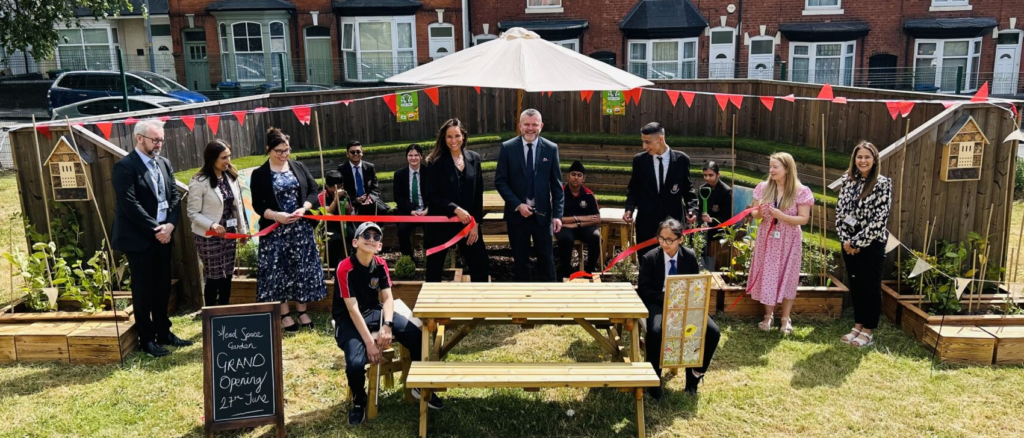
Grand Opening – Head Space Garden 🌿

Date: 27th June 2025

We are delighted to announce the official opening of our Head Space Garden—a calm, reflective space designed to support wellbeing across our school community.

This garden is now open to all staff and students, and we look forward to seeing it grow and flourish over time. A huge thank you to everyone who contributed to bringing this vision to life.

Let’s nurture this space together.
New for September 2026: ASDAN Preparing for Adulthood – Level 1 (Year 10)

From September 2026, Shireland Collegiate Academy will offer the ASDAN Preparing for Adulthood Level 1 course to selected Year 10 SEND learners—strengthening our commitment to an inclusive, skills‑focused curriculum that prepares SEND students for life beyond school.

Aims

  • Build essential life and independence skills.
  • Prepare students for post‑16 pathways through practical, real‑world tasks.
  • Develop confidence, communication, teamwork, and employability.
  • Provide meaningful accreditation that values practical strengths.

Impact

This qualification boosts engagement and motivation, helping learners feel confident, capable and ready for adulthood. It supports progression into Foundation Learning, vocational courses, apprenticeships, or supported routes, while strengthening everyday skills such as organisation, decision‑making, communication and self‑advocacy—ensuring students leave Year 11 equipped for both life and learning

Meet the team

Miss C McKnight

Designated Teacher for Looked After and Previously Looked After Children

Mr M Appleby

Assistant SENDCo

Miss E Penn

Speech, Language and Communication Intervention Manager

Mrs S Gill

Cognition and Learning Intervention Manager

Miss H Sadia

Learning Support Year 11 - Sixth Form

Miss R Cartwright

Inclusion Development Practitioner

Ms O Ajayi

Learning Support Year 7 - 9

Miss L Rutter

SEMH Support

Miss T Bailey

Learning Support

Mrs H Vidaurri

Medical, Physical and Sensory Intervention Manager

Mrs A Arfan

SEMH Support

Ms J Hodges

Speech, Language and Communications Intervention Manager

Autism Spectrum Condition affects how people understand the world around them. It is known as a “spectrum” disorder as there are different levels and areas of difficulties that people experience. 

Difficulties may include social communication, social interaction, sensory seeking/avoidance behaviour and rigid thought processes.

Speech, language and communication needs (SLCN) is the term given to describe the extensive range of needs related to all aspects of communication – from understanding others to forming sounds, words and sentences to expressing ideas and emotions and using language socially.  

Developmental language disorder (DLD) is a condition where children have long-term challenges talking and/or understanding words. Children with DLD may have lots of ideas but find it hard to put their ideas into words and understand what other people say to them. Their difficulties can be hard to spot and may be ‘hidden’ for a long time.  A child can be diagnosEd with DLD if their challenges with talking and/or understanding words: 

  • have a big impact on how well they do at school, or in everyday life;  
  • are not caused by another condition, such as hearing impairment or autism; and 
  • are not likely to get better by age five – their challenges are likely to be life-long.  

Most children with DLD will need support and changes to the environment at school to help them. Some people with DLD continue to need support when they are adults. 

SEMH stands for Social, Emotional and Mental Health.It is a term used in the SEND Code of Practice (2015) for a child who is “becoming withdrawn or isolated” or who is “displaying challenging disruptive or disturbing behaviour”.

A child with SEMH needs may have:

  • Anxiety
  • Depression
  • Self Harm
  • Attachment Disorders
  • Issues with Substance Misuse
  • Eating Disorders
  • Difficulties with emotional regulation
  • Psychosis
  • ​​​​​​​Obsessive Compulsive Disorder (OCD)
  • Oppositional Defiant Disorder (ODD)
  • Attention Deficit Disorder (ADD)
  • Attention Deficit Hyperactive Disorder (ADHD) 

There are a range of different sensory and/or physical needs that a young person may have at the Academy:

  • Hearing Impairment
  • Visual Impairment
  • Physical Disability

A Physical Disability becomes a Special Educational Need when it calls for special educational provision to be made for the child and is classed as substantial and long term.

Examples of a Physical Disability that calls for special educational provision may include:

  • Cerebral Palsy
  • Sickle Cell Anaemia
  • Scoliosis

Cognition and Learning is the broad term used for students who may have MLD (Moderate Learning Difficulty) and SpLD (Specific Learning Difficulty). 

MLD identifies students who learn at a slower pace to their peers, even with appropriate differentiation and intervention. These students will require support in all areas of the curriculum.

SpLD identifies students who have difficulty with one or more specific aspects of learning. This includes:

  • Dyslexia (difficulty with words)
  • Dyscalculia (difficulty with numbers)
  • Dyspraxia (difficulty with organisation of body and mind)
  • Dysgraphia (difficulty with writing)

Multi-Tiered System of Support (Attendance)

Tier 1 – Universal StrategiesTier 2 – Individual StrategiesTier 3 – Higher Need Strategies

Role of Families

Support consistent attendance and punctuality  though positive routines and collaboration with school.Work closely with the school to address attendance concerns early, before they escalate.Communicate openly with the school so challenges can be spotted early and solutions can be found together. 
Maintain open communication with staff to share concerns early and work constructively together.Help create and review support plans with the school. 
Work with school to identify and address barriers, contributing to developing joint solutions.Engage with Early Help when it is offered. 
Contact school promptly when issues arise to enable timely, supportive responses.Support their child to take part in interventions focused on improving attendance.  
Attend school events to strengthen engagement and reinforce shared expectations.